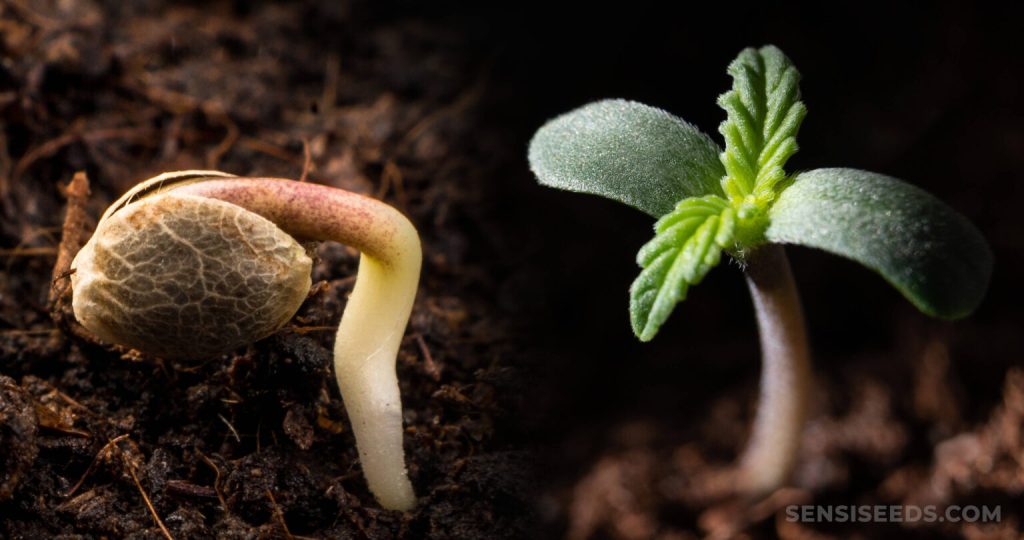
How to Give Young Plants the Best Start
The seedling stage is the first and often most delicate part of cannabis cultivation. At this point, young plants are fragile, and even small mistakes can slow their growth or ruin them entirely. The good news is that with the right setup and a little attention, even beginner growers can guide seedlings into strong, healthy plants.
Start with strong genetics
Healthy plants begin with healthy seeds. Choose genetics that suit your experience level, grow space, and preferred effects or flavors. If you are new to growing, look for easy varieties with a reputation for resilience. The better the genetics, the better your chances of producing a rewarding harvest.
Create the right environment
Before germinating seeds, prepare a space that gives seedlings the conditions they need to thrive.
Use a dedicated area where light, temperature, and humidity are easy to control. Small propagators or a clear dome can help protect young plants and keep conditions stable.
Choose containers that drain well, such as seed trays, small cups, or one-liter pots. Seedlings should never sit in stagnant water.
Use light, airy soil with low nutrient content. Heavy potting mixes made for vegetables or ornamentals can burn young roots. A well-draining organic soil with a balanced pH is ideal.
Lighting matters too. Seedlings do best under soft, low-wattage light at first. Once they sprout, place them under a steady 18/6 light cycle to prevent stretching and encourage compact growth.
Keep temperatures warm and humidity high. Seedlings generally prefer conditions around68–77°F- (20–25°C) with relative humidity near 65–70%. A gentle breeze from a small fan can help strengthen stems, but avoid direct airflow.
Protect seedlings from physical damage, pets, pests, and strong wind.
Germinate the seeds
A simple paper towel method is one of the most reliable ways to germinate seeds.
Place seeds between moist paper towels on a plate, cover them, and keep them warm. Check regularly to make sure the towels stay damp, not soaked. Most seeds will sprout within a week, though some can take longer. Once a taproot appears, they are ready to plant.
Older seeds (20+years old) may benefit from a short soak in water and a bit of a product called “super thrive” before germination. Its basically B vitamins and Gibberillic acid, its gotten seeds I otherwise could not germinate, to well actually germinate, with out having to use laboratory grade scales to measure hormones.
Plant the sprouted seeds
Fill small containers with moist soil and make a shallow hole about 1 cm deep. Place each seed taproot-down, cover lightly, and keep the soil consistently moist.
Small containers help young roots fill out their space properly and make watering easier to manage. As soon as seedlings emerge, move them under good light.
Water carefully
Watering is one of the most important parts of seedling care. Too little water can dry out young plants and stall root growth. Too much can suffocate roots and invite disease.
Keep the soil lightly moist, not wet. Water only when the top layer feels dry to the touch, and apply water gently around the stem rather than directly on it. Light misting can also help while the root system is still developing.

Skip the nutrients
Seedlings do not need fertilizer. In fact, adding nutrients too early can do more harm than good. Light soil already provides enough to support early growth.
Transplant at the right time
Move seedlings only when they begin to outgrow their starter containers. Signs include roots reaching the edges of the pot or showing through drainage holes.
Transplanting too early can shock young plants. Waiting too long can cause roots to become bound and slow future growth.
If seedlings were started in trays, they may be ready after their first true leaves appear. In larger containers, it may take longer.
A good next step is a small 3-liter pot before moving to a larger final container later.
Know when to move them
Seedlings can be moved outdoors or under stronger lights once they are more established and have several leaves. If moving them outside, avoid harsh midday sun at first. If moving them under HID or LED grow lights, do so gradually so they can adjust without stress.
Prevent common problems
Damping off and stretching are two of the biggest risks during the seedling stage. Damping off is usually caused by excess moisture and poor airflow, while stretching often happens when light is too weak or too far away. Good airflow, proper watering, and strong but gentle light will prevent most issues.
Final thoughts
A strong harvest starts with strong seedlings. By choosing good genetics, preparing the right environment, watering carefully, and transplanting at the right time, you give your plants the best possible start. The seedling stage may be delicate, but it is also where the foundation for the entire grow is built.


Leave a Reply