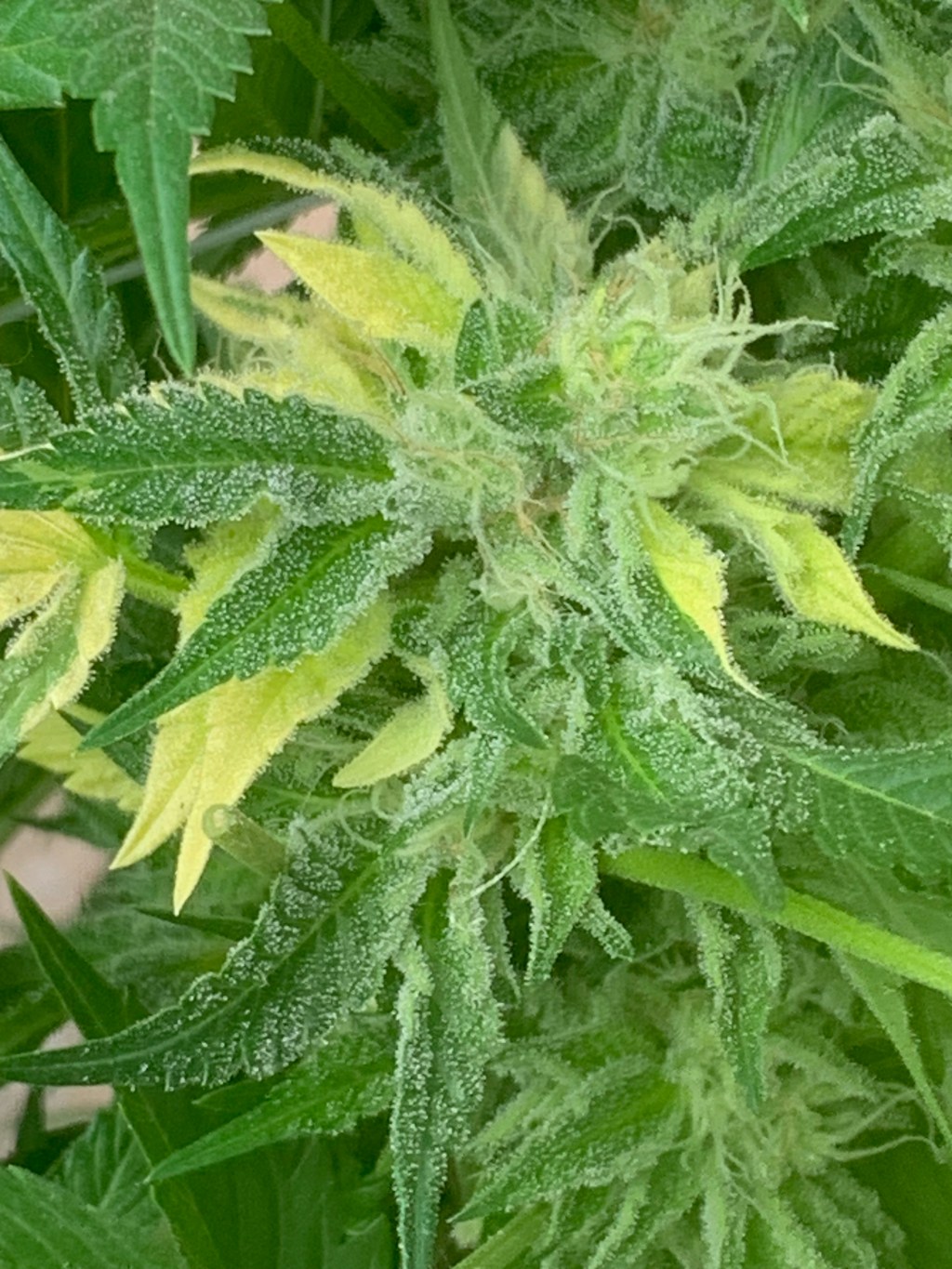
Cannabis plants are known for their lush green leaves, but occasionally, you may come across a unique and captivating sight: a cannabis plant with leaves displaying patches of different colors, often referred to as variegation. This intriguing phenomenon can add an extra level of beauty to your garden or indoor grow space. In this blog post, we will explore the causes of variegation in cannabis plants and shed light on the underlying factors that contribute to this captivating trait.
Genetic Factors:
Variegation in cannabis plants primarily stems from genetic factors. Plants exhibit variegation when there are alterations or mutations in their DNA. These genetic changes can affect the production and distribution of pigments responsible for leaf coloration. The specific genes involved in variegation are still being researched, but it is believed that both nuclear and chloroplast genomes play a role in this trait.
Chimeric Mutations:
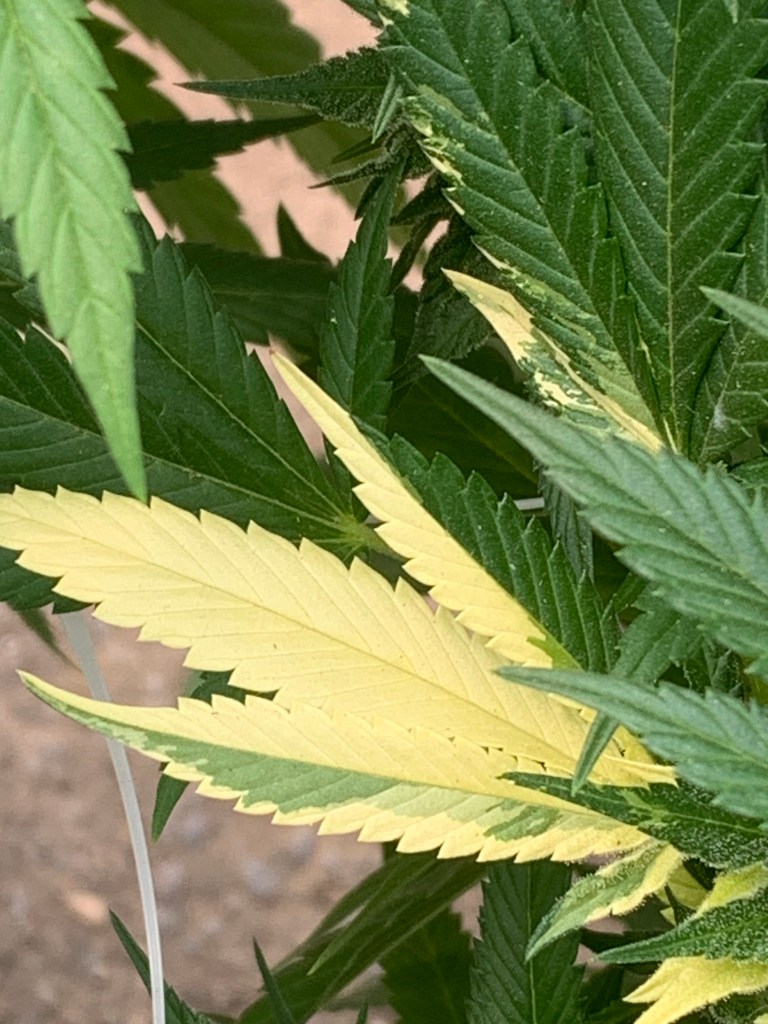
One of the main genetic causes of variegation in cannabis plants is chimeric mutations. Chimerism refers to the presence of two or more genetically distinct cell types within the same organism. When it comes to cannabis, chimeric mutations often involve a combination of genetically normal cells (green) and mutated cells lacking or producing less chlorophyll (white or yellow). This results in the characteristic variegated pattern on the leaves.
Chimeric mutations can occur spontaneously during plant development or arise due to external factors, such as exposure to radiation or chemicals. These mutations are usually stable and will be passed on to subsequent generations if the plant is propagated vegetatively.
Environmental Factors:
While genetic factors are the primary cause of variegation in cannabis plants, environmental conditions can also influence the extent and appearance of variegation. Light intensity, temperature, and nutrient availability can all play a role in determining the prominence of variegation in cannabis leaves.
Light Intensity:
Variegated cannabis plants often exhibit a higher sensitivity to light than their non-variegated counterparts. Exposing variegated leaves to direct sunlight for extended periods can cause the green portions to become more pronounced, overshadowing the variegated patches. In contrast, low light conditions may enhance the variegation, resulting in more vibrant patterns.
Temperature:
Extreme temperatures, both hot and cold, can affect variegation in cannabis plants. High temperatures can cause variegated leaves to become greener, while cold temperatures may intensify the white or yellow patches. Maintaining a stable temperature range within the optimal limits for cannabis growth can help preserve and enhance the variegated appearance.
Nutrient Imbalances:
Nutrient deficiencies or imbalances can impact variegation in cannabis plants. For instance, a lack of magnesium (Mg) can lead to a condition known as chlorosis, where the leaves turn pale yellow or white, potentially increasing the variegation effect. Monitoring and providing balanced nutrient solutions are essential to ensure healthy growth and maintain the desired variegated pattern.
Variegation in cannabis plants adds a unique aesthetic dimension to any garden
Although attractive there are not many commercially desirable traits in a variegated cannabis line. I can think of one or 2 growers on instagram doing cool thing in that area, and hope they continue just for the sake of preserving the lines. I still get excited when I see a random one pop up.
References:
- Fichman, Y., Gerdes, S., & Kovács, L. G. (2020). The colorful biology of variegated plants. Current Opinion in Plant Biology, 53



 Silphium Extracts
Leave a comment