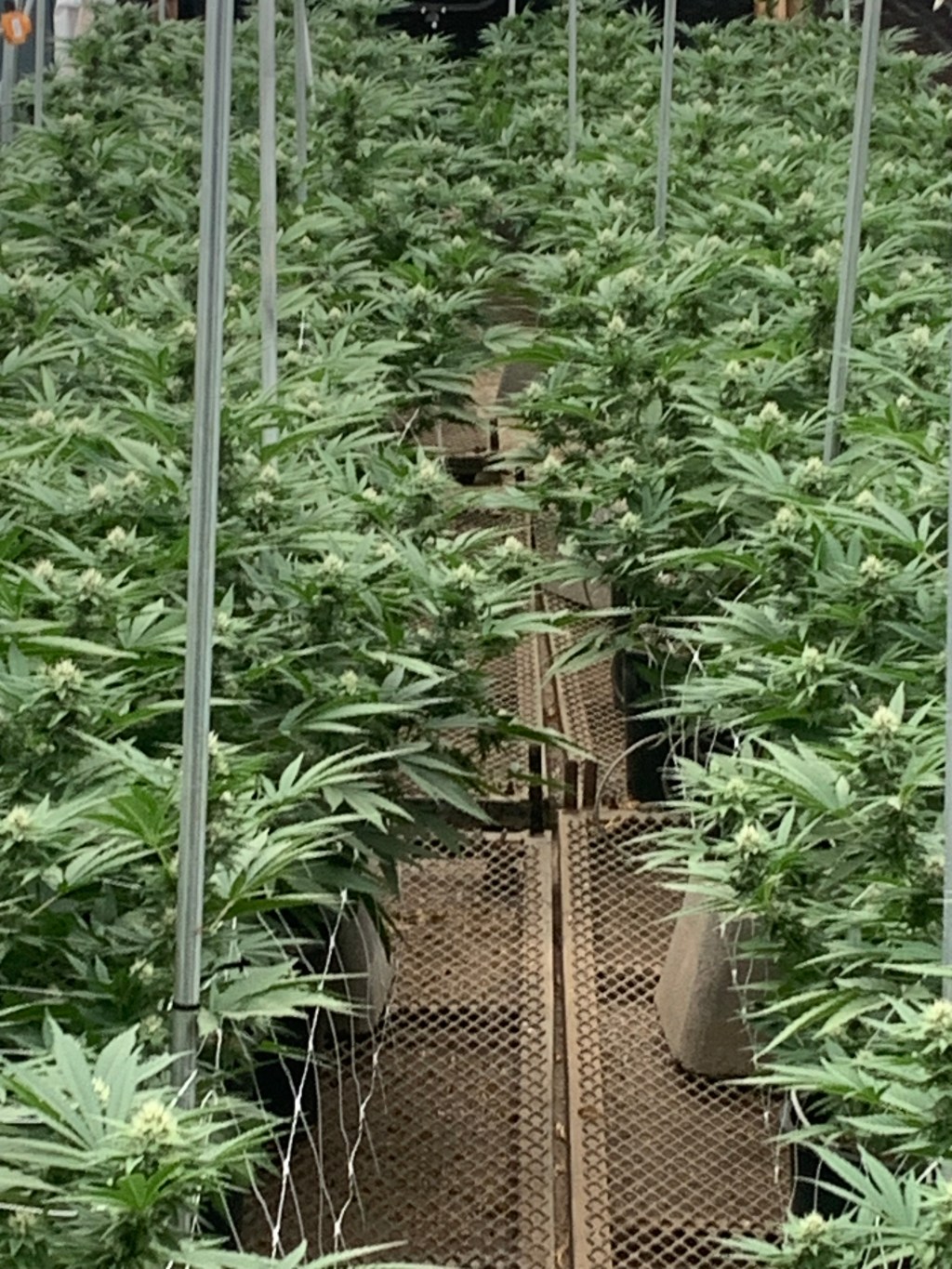
Hop latent viroid, or HLVd, has emerged as a global concern, casting a shadow on the cannabis industry. Recent articles in MJBizDaily and the Wall Street Journal have highlighted the financial repercussions HLVd is inflicting on growers, business leaders, and investors.
This viroid primarily spreads through mechanical transmission, affecting any plant that comes into contact with infected plants or is wounded by contaminated tools. However, there is a glimmer of hope for those seeking to protect their cannabis crops: seeds produced from HLVd-free parents do not carry the viroid.
HLVd takes a precarious journey within the plant, traveling from the initial infection site to the roots and then back up to actively growing parts of the plant that require nutrients from the roots. This journey results in lower yields, reduced potency, smaller buds, deformed leaves, discoloration, and fragile stalks and branches.
When grown from clean seed stock, plants can contract HLVd during the vegetative stage or later if infected tools are used for pruning and defoliation. Fortunately, they do not suffer the same yield depression as clonal cuttings afflicted with HLVd, as the viroid takes time to infect the entire plant and become symptomatic.
Here’s what we’ve learned about HLVd:
- In 2019, in collaboration with Glass House Farms, we uncovered the scientific reason behind “dud” plants caused by HLVd. A subsequent study in 2019 confirmed this discovery.
- In 2021, Dark Heart Nursery made a startling revelation that over 90% of California’s grow sites tested positive for HLVd.
- Now, Zamir Punja PhD, Professor of Plant Biotechnology at Simon Fraser University, has found traces of HLVd in plant material even four weeks after harvest, in dried leaves and roots. He estimates that approximately 40% of the flower in dispensaries carries HLVd.
Preventing HLVd in your facility:
- Employ well-established biosecurity management procedures, including cleaning clippers before and after using them with each individual plant.
- Adhere to phytosanitary methods to ensure every plant you introduce to your facility is free of pests and diseases.
- If you detect HLVd, isolate infected plants from healthy ones and remove them immediately.
- Ensure your genetics come from clean parent stock.
Start Clean, Grow Clean:
Sourcing genetics from a reliable provider that follows stringent phytosanitary methods to maintain their parent stock is paramount. Any parent stock, be it clonal mothers or seed production, infected with HLVd will transmit it to 100% of its clonal cuttings.
Starting with clean stock is the ultimate preventive measure against this Billion-Dollar Threat. While any plant can fall prey to HLVd when in contact with infected plants or tools, seeds produced from HLVd-free parents or clonal cuttings from HVLd-free mothers inherently do not carry the viroid.
At Silphium Extracts/Seeds, we are committed to rigorous phytosanitary practices in our breeding program and seed production, resulting in HLVd-free plants. Our testing procedures include checking for HLVd in our parent stock, providing you with the assurance that you’re starting with a clean slate every time you sow a seed.


 Silphium Extracts
Leave a comment